
The FreshWater Salt System Explained: How It Works, Maintenance Schedule, and Troubleshooting for Hot Spring Owners
Posted by HTSS Team on Aug 24th 2026
The FreshWater Salt System Explained: How It Works, Maintenance Schedule, and Troubleshooting for Hot Spring Owners
If you own a Hot Spring spa with a FreshWater Salt System, you already know your water feels different, softer, gentler on skin and eyes, and free of that sharp chemical smell many people associate with hot tubs. But knowing your system works well and knowing how it actually works are two different things. Understanding the mechanics behind your FreshWater Salt System makes it far easier to keep your spa running smoothly, catch small problems before they become expensive ones, and know exactly which parts to reorder and when.
This guide walks through how the system generates chlorine from salt, the setup and maintenance schedule that keeps it running properly, common troubleshooting scenarios, and the chemicals that support the system between cartridge changes.
What Is the FreshWater Salt System?
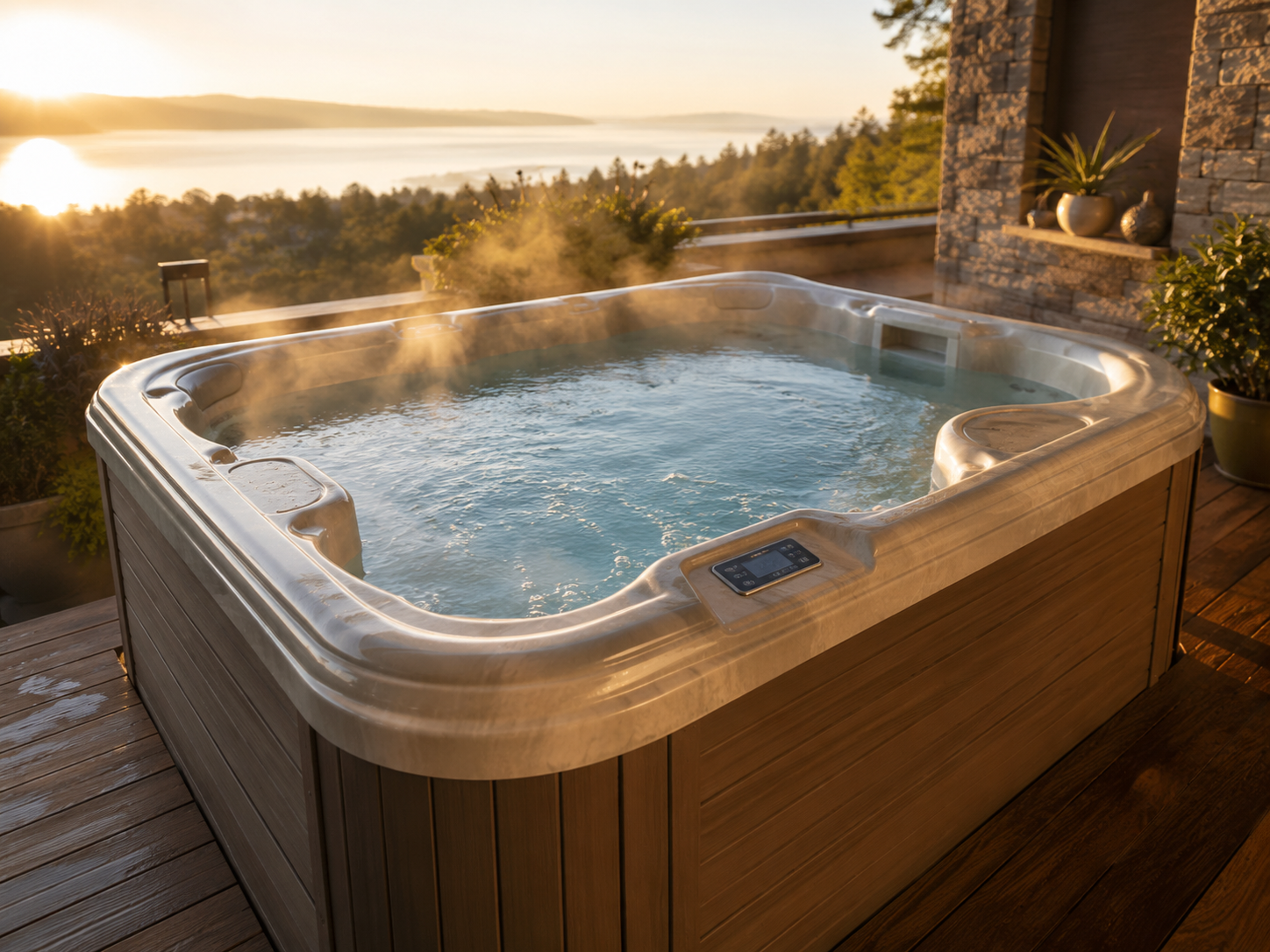
The FreshWater Salt System is a self-regulating sanitizing system built into many Hot Spring spas. Rather than manually dosing chlorine granules or tablets into your water every few days, the system uses a titanium cartridge to convert dissolved salt into chlorine automatically, in small, continuous amounts, so your water stays sanitized without the spikes and dips that come with manual dosing.
How It Converts Salt to Chlorine
When you fill your spa, you add a measured amount of salt directly to the water. That salt doesn't sanitize the water on its own. It's the raw material the system uses to produce chlorine. Water flows through the titanium cartridge, which uses a low-voltage electrical charge to convert dissolved salt (sodium chloride) into free chlorine through a process called electrolysis. That chlorine sanitizes the water, then naturally converts back into salt, and the cycle repeats. This is why you only need to add salt once at fill time rather than continuously topping it off.
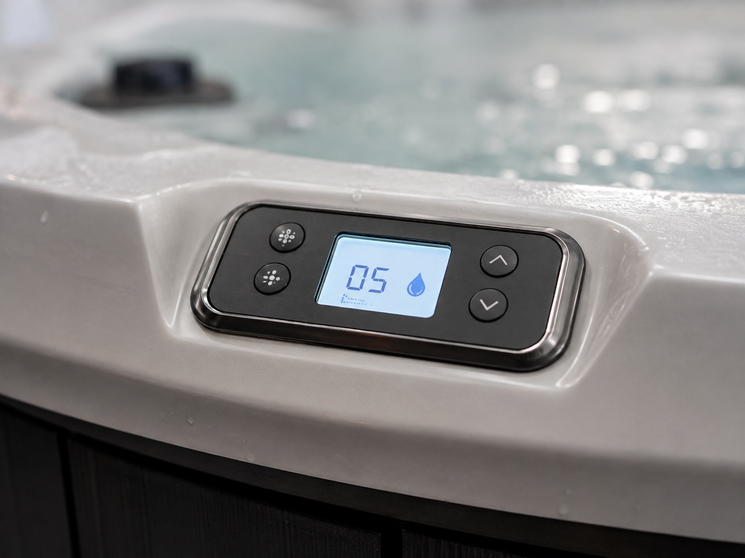
The amount of chlorine the system produces is controlled by an "output level" you set on your spa's control panel. Output level essentially tells the cartridge how many hours per day to run, and that setting should scale with how heavily the spa gets used.
Why Hot Spring Owners Choose the FreshWater Salt System
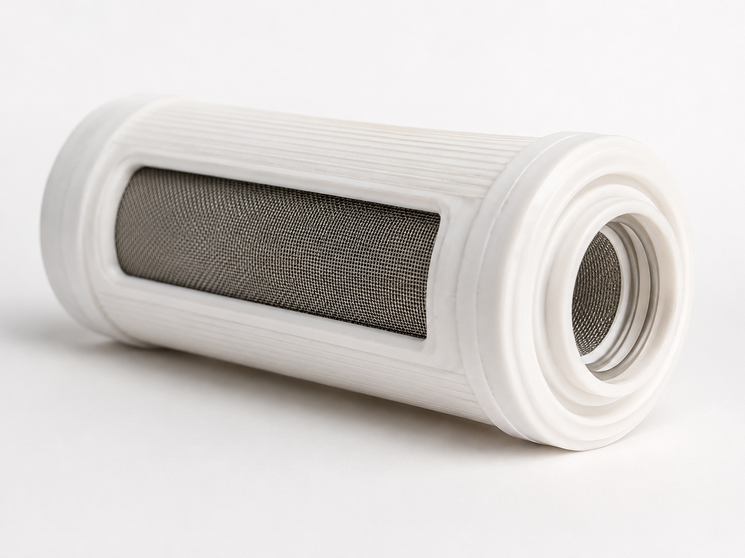
Owners who switch from manual chlorine dosing to the FreshWater Salt System typically notice a few things right away. Water feels softer against skin, there's little to no chlorine odor, and eye and skin irritation drops noticeably compared to spas maintained with granular chlorine alone. Because the system produces chlorine steadily rather than in one large dose, sanitizer levels stay more consistent, which also tends to extend the life of the water itself, many owners find they can go close to a full year between complete drains and refills with normal use, compared to the three-to-four-month cycle that's common with manually dosed spas.
There's also a convenience factor. Once it's set up correctly, the system requires far less day-to-day intervention than manual dosing. That doesn't mean zero maintenance, though, and skipping the maintenance steps below is the single biggest reason owners run into problems.
Setting Up and Using Your Salt System
Adding Salt When You Fill Your Spa
Salt gets added once, when you fill or refill the spa, using the amount specified for your spa's water volume. Adding too little salt starves the system of the raw material it needs and chlorine production drops off, even if the cartridge itself is in good condition. Adding too much can push conductivity out of range and trigger error messages on some control panels. If you've recently drained and refilled and the system seems sluggish to get going, low salt levels are the first thing to check before assuming the cartridge has failed.
Setting the Output Level
Output level should reflect bather load, how many people use the spa, how often, and for how long. A spa used lightly by one or two people needs a lower output level than one that regularly hosts a full house on weekends. If you notice chlorine levels running low on a test strip after heavy use, bumping the output level up temporarily is the right first move, rather than shocking the water repeatedly or adding granular chlorine on top of the salt system.
Ongoing Maintenance Schedule
The FreshWater Salt System is low-maintenance, not no-maintenance. Three routines keep it working the way it's supposed to.
Testing Every 10 Days
Even though the system self-regulates, environmental factors (bather load, ambient temperature, sunlight exposure for outdoor spas, even how often the cover is left open) shift chlorine demand over time. Dip a test strip roughly every 10 days and adjust the output level if readings are trending high or low. This is the single easiest habit that prevents most water-quality complaints.
Replacing the Cartridge Every Four Months
The titanium cartridge is a wear item, not a permanent component. Plan on replacing it roughly every four months of active use. A cartridge that's overdue for replacement is one of the most common reasons owners see chlorine output drop even with salt levels and output settings correct. Swapping the cartridge takes just a few seconds and requires no tools, so there's no reason to run it well past its service life.
Annual Water Change
Even with excellent sanitation, spa water accumulates dissolved solids, body oils, and other contaminants that filtration and chlorine alone can't fully remove. Plan on a full drain, clean, and refill roughly once a year for a salt-system spa under normal use, noticeably less often than the three-to-four-month cycle typical of manually dosed spas, but not something to skip indefinitely.
Troubleshooting Common Issues
Low or Zero Chlorine Reading
Check salt level first, then confirm the output level is set appropriately for current usage, then inspect the cartridge for scale buildup or age. If the cartridge is more than four months old, replace it before troubleshooting further.
Cloudy Water Despite Normal Chlorine Readings
Cloudy water with acceptable chlorine usually points to a filter problem rather than a sanitizing problem, a filter overdue for cleaning or replacement, or total dissolved solids climbing toward the point where a full water change is due.
Error Codes Related to Salt or Cell Function
Most control panels will flag conductivity or cell-related errors when salt levels are too high, too low, or when the cartridge has failed. Confirm salt concentration against your spa's specified range before assuming the cartridge itself needs replacing.
Scale Buildup on the Cartridge
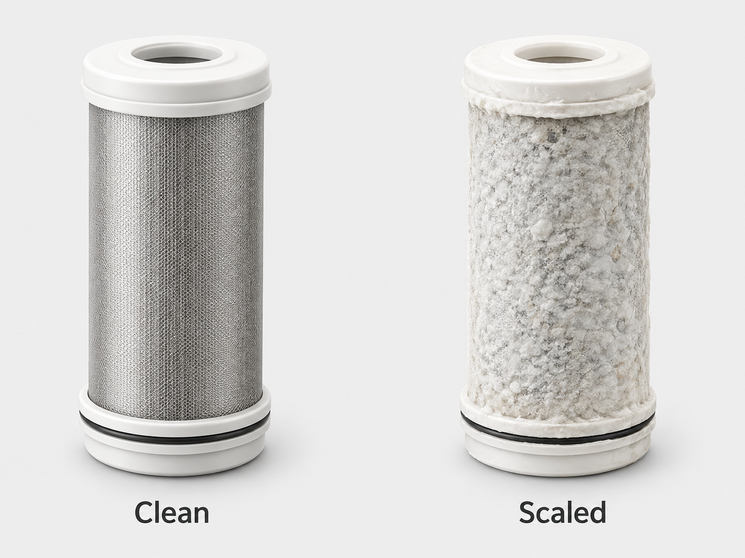
Mineral buildup on the titanium cartridge reduces its efficiency over time, even before the four-month mark. Periodic inspection and gentle cleaning per your spa's manual can extend performance between replacements, particularly in areas with hard fill water.
FreshWater Chemicals That Support the System
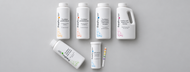
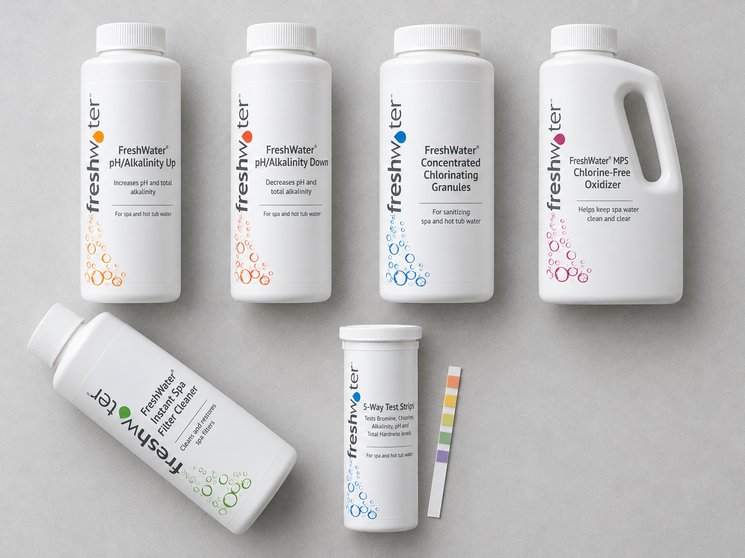
The salt system reduces how much manual chemical dosing you need, but it doesn't eliminate the need for balanced water chemistry. pH and alkalinity still need periodic attention, since chlorine (however it's produced) works far less effectively in water that's out of balance. Keeping a stock of test strips, pH adjusters, and a replacement cartridge on hand means you're never caught mid-week with sluggish sanitation and no way to correct it quickly. Prisco Hot Spring Supplies carries FreshWater Salt System cartridges and the companion FreshWater Chemicals line sized specifically for Hot Spring spas, so you're not guessing at compatible replacements.
Frequently Asked Questions
How often do I need to add salt to my FreshWater Salt System?
Typically only once, when you fill or refill the spa. You shouldn't need to add salt again until your next full drain and refill, unless a leak or excessive splash-out has reduced your water volume significantly.
How do I know if my cartridge needs replacing before the four-month mark?
Watch for chlorine readings that stay low even after you've confirmed salt levels and output settings are correct. That's the clearest sign the cartridge itself has reached the end of its useful life.
Can I use regular table salt in my FreshWater Salt System?
No. Use the salt type and amount specified in your owner's manual. Additives and impurities in table salt or ice-melt products can interfere with the system or damage components.
Is the FreshWater Salt System safe for sensitive skin?
Yes, and it's often the reason owners switch to it. Because chlorine is produced steadily rather than dosed in bursts, salt-system spas tend to be gentler on skin and eyes than manually chlorinated ones.
Do I still need to shock my spa if I have a FreshWater Salt System?
Occasionally, yes. After unusually heavy use or if chlorine demand spikes faster than the system can keep up, a one-time shock treatment can help the system catch back up. It shouldn't be a routine habit, though; frequent shocking usually means the output level needs adjusting instead.
Keeping a Hot Spring FreshWater Salt System running well comes down to three habits: testing every 10 days, replacing the cartridge every four months, and refilling the spa about once a year. Stay on top of those three, and the system does the rest, delivering consistently clean, soft water with far less day-to-day effort than manual chlorination.