
Hot Spring Tri-X Filters: How They Work, How to Clean Them, and When to Replace Them
Posted by HTSS Team on Sep 14th 2026
Hot Spring Tri-X Filters: How They Work, How to Clean Them, and When to Replace Them
Most hot tub owners think about their filter only when the water starts to look dull or the jets feel weak. Hot Spring owners have a bit of an advantage here, because Hot Spring spas are designed around a filtration layout that does more of the work automatically, and many models use the Tri-X filter, a cartridge built very differently from the pleated filters most people picture. Understanding how that filter is made, what it needs from you, and how long it should last makes one of the most routine maintenance jobs on your spa faster and more predictable.
This guide walks through how Tri-X filters work, how they compare to traditional pleated cartridges, a practical cleaning routine, the replacement schedule Hot Spring recommends, and the warning signs that a filter needs attention before its time is up.
How Filtration Works in a Hot Spring Spa
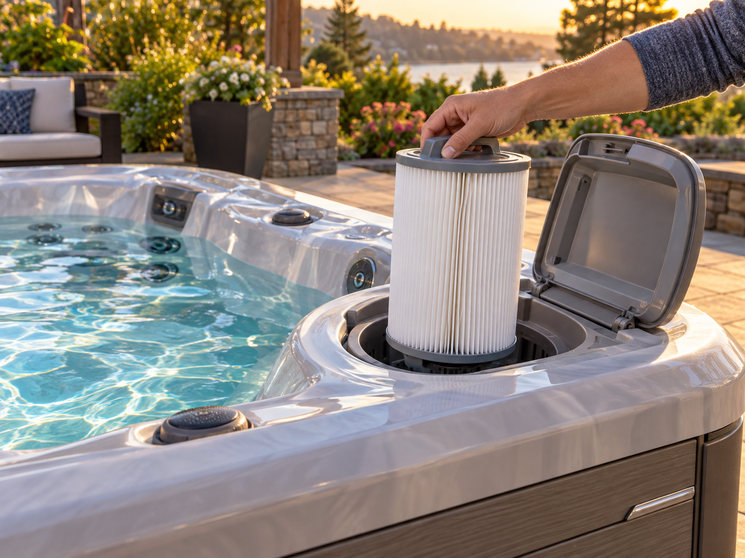
Before looking at the filter itself, it helps to understand where it sits in the system. Hot Spring designs its spas with filters at every intake point and every return, with up to five filters total depending on the model. That layout means water is being filtered whenever it is moving through the spa, not only during a scheduled filter cycle, and it spreads the workload across several cartridges instead of forcing one filter to catch everything.
The practical result for you as an owner is that each filter tends to load up more gradually, and the water stays clearer between cleanings. It also means that when you do maintenance, you should check every filter location, not just the most obvious one in the main filter compartment. A single neglected filter can restrict flow on its own circuit even while the others look fine.
What Makes the Tri-X Filter Different
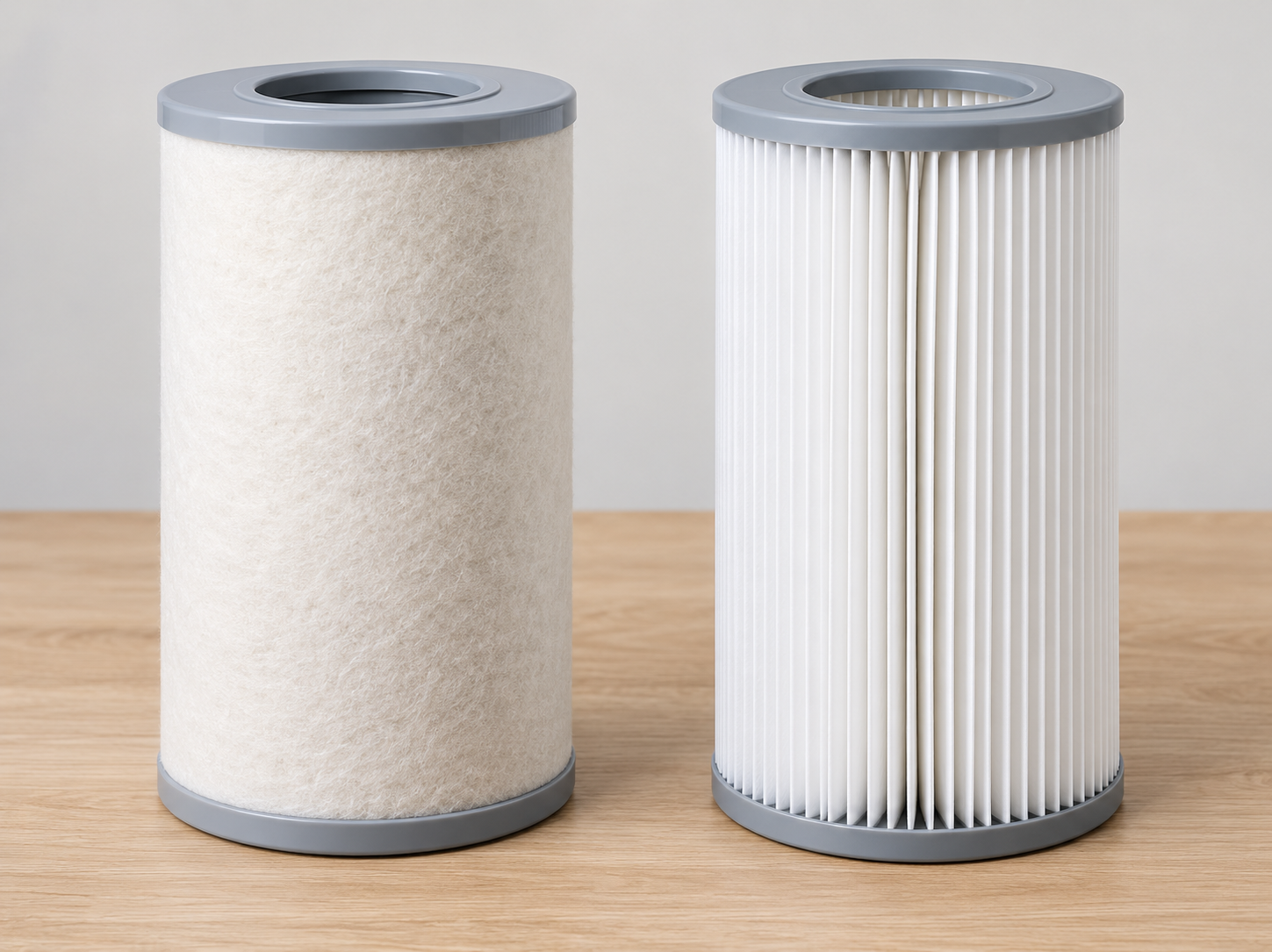
Traditional hot tub filters are made from pleated polyester or paper media folded around a plastic core. The pleats create a large surface area, but they also trap debris deep in narrow folds that are hard to rinse clean, and the media gradually breaks down with exposure to sanitizers and heat.
The Tri-X filter takes another approach. Hot Spring describes it as a chlorine-resistant polypropylene shell wrapped with a proprietary multi-dimensional felt. There are no pleats. Instead of relying on folds to add surface area, the felt media captures particles throughout its depth while leaving the outer surface open to water. Hot Spring notes that this no-pleat design maximizes water exposure for better filtration and strong flow.
Why the Design Matters Day to Day
- Easier cleaning: With no pleats to pry apart, debris rinses off the surface more readily.
- Chemical resistance: The polypropylene shell is built to hold up to chlorinated water better than standard polyester media.
- Longer service life: Because the media resists breakdown, the filter lasts roughly twice as long as a typical pleated cartridge.
- Consistent flow: Open media helps maintain the water flow your heater and jets depend on.
A Practical Tri-X Cleaning Routine
A Tri-X filter is lower maintenance than a pleated cartridge, but it is not maintenance free. Oils from skin, lotions, and hair products, along with fine particles and minerals, still collect in the media over time. A simple routine keeps the filter performing the way it was designed to.
Monthly: Rinse and Inspect
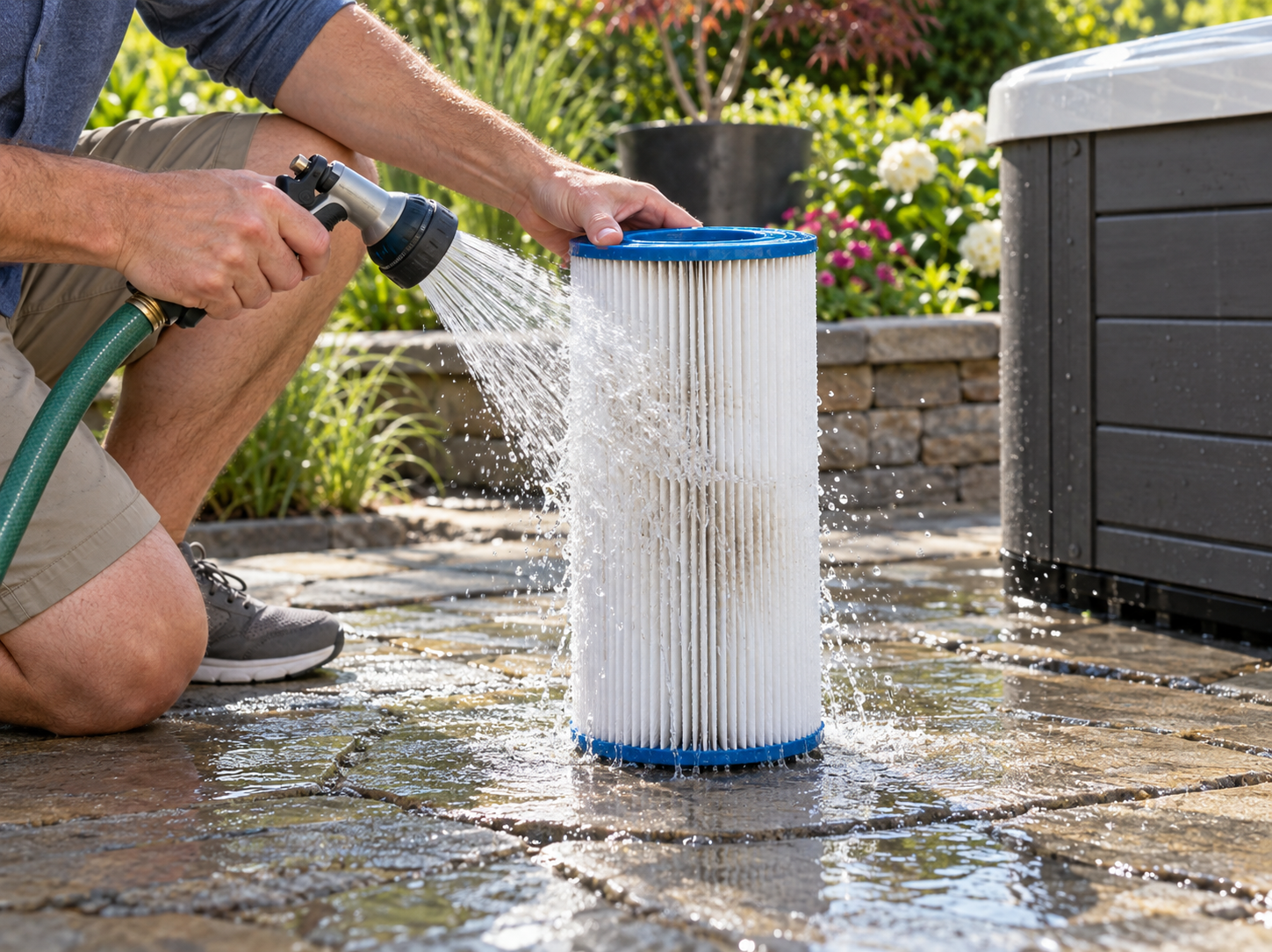
Hot Spring recommends rinsing filters with a garden hose once a month and inspecting them for wear. Turn off power to the spa before removing any filter. Lift the filter out, rinse it from top to bottom, and rotate it so you cover the entire surface. An instant filter cleaner spray, applied before rinsing, helps lift oils and fine debris that plain water can leave behind. If your spa sees heavy use, with several people soaking most days, consider rinsing more often than monthly.
At Every Drain and Refill: Deep Clean
When you drain and refill your spa, give the filters a deeper cleaning with a dealer-recommended filter cleaning solution. Soaking breaks down the oils and scale that build up inside the media where a hose cannot reach. Follow the product label for soak time, then rinse thoroughly so no cleaner residue goes back into fresh water, where it can cause foaming.
What to Avoid
- Do not use household detergents or dish soap, which can leave residue that causes foam.
- Do not scrub the media with a stiff brush, which can damage the surface.
- Do not run the spa with a filter removed. Unfiltered water can carry debris into pumps and plumbing.
- Do not use a pressure washer on high settings, which can tear or compress the felt.
When to Replace a Tri-X Filter
According to Hot Spring, Tri-X filters should be replaced every four to six years, depending on usage and visible wear. For comparison, Hot Spring puts standard polyester or paper filters at two to three years. That longer window is one of the main reasons Hot Spring owners choose Tri-X, since fewer replacements over the life of the spa offset the higher cost of each cartridge.
Where your filter lands in that four-to-six-year range depends on how the spa is used. A spa with a small household, balanced water, and regular rinsing will tend toward the longer end. A spa with frequent guests, inconsistent water chemistry, or skipped cleanings will wear filters faster. Treat the range as a guide, and let the condition of the filter make the final call.
Signs a Filter Needs Attention Early
Even a durable filter can wear out ahead of schedule. Watch for these signs:
- Cloudy water that will not clear even when sanitizer and pH are in range.
- Weak or surging jets that improve temporarily after a rinse, then drop off again quickly.
- Heating problems or indicator lights pointing to low flow, since restricted flow through the heater can trigger safety shutoffs.
- Visible damage such as cracked end caps, a warped core, or media that stays discolored after deep cleaning.
- A slick or greasy feel that returns right after cleaning, a sign oils have saturated the media.
If a deep clean does not restore normal flow and clarity, replacing the filter is usually cheaper than fighting the water chemistry problems a worn filter creates.
Filters and the Rest of Your Spa
A clean filter protects far more than water clarity. Restricted flow makes pumps work harder and can trip the heater's high-limit protection, which shuts the heater down to prevent damage. Many of the "my spa won't heat" calls that turn out to be simple fixes trace back to a clogged filter. Keeping your Tri-X filters clean is one of the cheapest ways to protect your heater, pumps, and water care system.
If your spa uses a salt or cartridge-based water care system, clean filters also help that system work efficiently. Less organic load in the water means your sanitizer spends its effort keeping the water safe instead of chasing debris.
Keeping a Spare on Hand
Many Hot Spring owners keep one spare set of filters so they can swap in a clean set immediately and deep clean the used set at their convenience. Rotating two sets also gives each filter time to dry fully between uses, which can help extend its life. When you order, confirm the correct filter for your spa's model and year, since filter sizes and fittings vary across the Hot Spring lineup.
Frequently Asked Questions
How long do Hot Spring Tri-X filters last?
Hot Spring recommends replacing Tri-X filters every four to six years, depending on how often the spa is used and how the filter looks. Standard polyester filters typically need replacement every two to three years.
How often should I clean my Tri-X filter?
Rinse it with a garden hose and inspect it about once a month, and give it a deeper soak in filter cleaning solution whenever you drain and refill the spa. Heavier use calls for more frequent rinsing.
Can I use a Tri-X filter in place of a pleated filter in my Hot Spring spa?
In many Hot Spring models, Tri-X is the standard or recommended upgrade, but compatibility depends on your model and year. Check your owner's manual or confirm fit with our team before ordering.
Why is my water still cloudy after cleaning the filter?
Cloudy water can also come from low sanitizer, high pH or alkalinity, or old water that needs changing. If the filter is clean and the chemistry is balanced, a shock treatment or a drain and refill is usually the next step. If the filter is several years old, it may simply be worn out.
Do I need to check more than one filter?
Yes. Hot Spring spas can have filters at several intake and return points. Check and clean every filter location during maintenance, not just the main compartment.
The Tri-X filter is one of the easiest parts of a Hot Spring spa to take care of, as long as it gets a monthly rinse, a deep clean at each water change, and a replacement every four to six years. That small, predictable routine keeps your water clear, your jets strong, and your heater protected, and it saves money compared with replacing pleated filters twice as often.